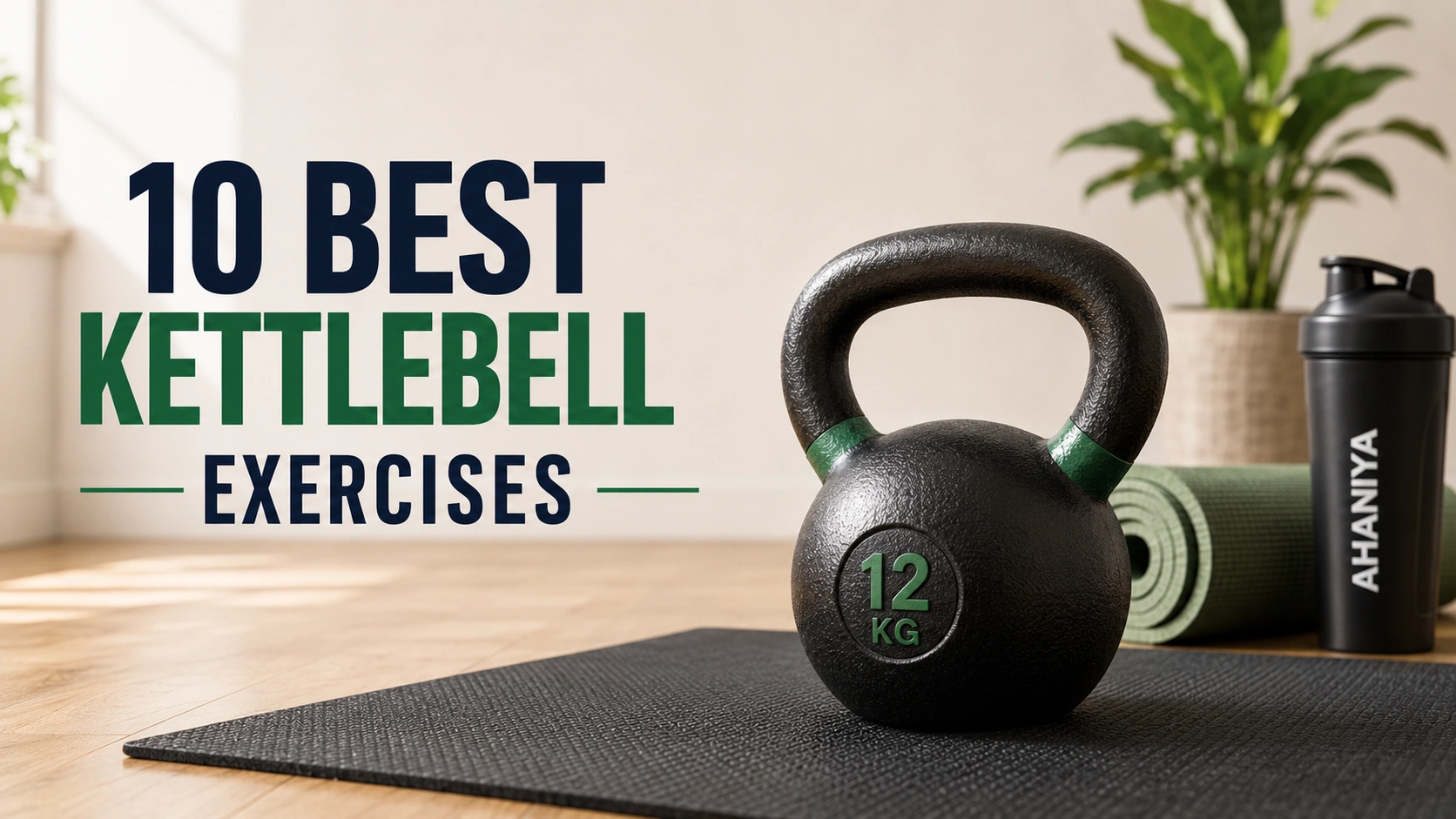
You've seen kettlebells sitting in the corner of every gym, looking deceptively simple. A cast iron ball with a handle. That's it. And yet that single object can replace an entire room of machines.
Most beginners buy a kettlebell and then stare at it. They do a few awkward swings, feel unsure about their form, and eventually push it under the bed. That's not a kettlebell problem. That's a starting point problem.
This guide fixes that. Whether you're working with a 8kg bell in a Delhi apartment or a 12kg bell on a Mumbai terrace, these 10 foundational movements give you everything you need to build strength, burn fat, and move better, all from home. For most Indian adults starting out, 8 to 12 kg is the right beginning weight. Women typically start at 6 to 8 kg. Men at 8 to 12 kg.
Master these 10 exercises and you'll have the base for every kettlebell programme that exists. Everything else builds from here.
Why Kettlebells Are Perfect for Home Workouts in India
India's average home gym space is a 6x6 feet corner. A kettlebell fits in that corner and does the work of machines ten times its size. That's not marketing language. It's physics.
A single kettlebell handles squats, deadlifts, rows, presses, swings, and carries. That covers your legs, back, chest, shoulders, arms, and core in one session. No cable machine, no bench, no rack required.
The practical benefits for Indian home training specifically:
- Fits under a bed or in a cupboard when not in use
- Works on marble, tile, and any flat floor surface
- No noise complaints from neighbours during swings (unlike jumping exercises)
- One-time cost versus Rs 18,000 to Rs 30,000 per year in gym membership fees
- Survives monsoon humidity without rusting if wiped dry after use
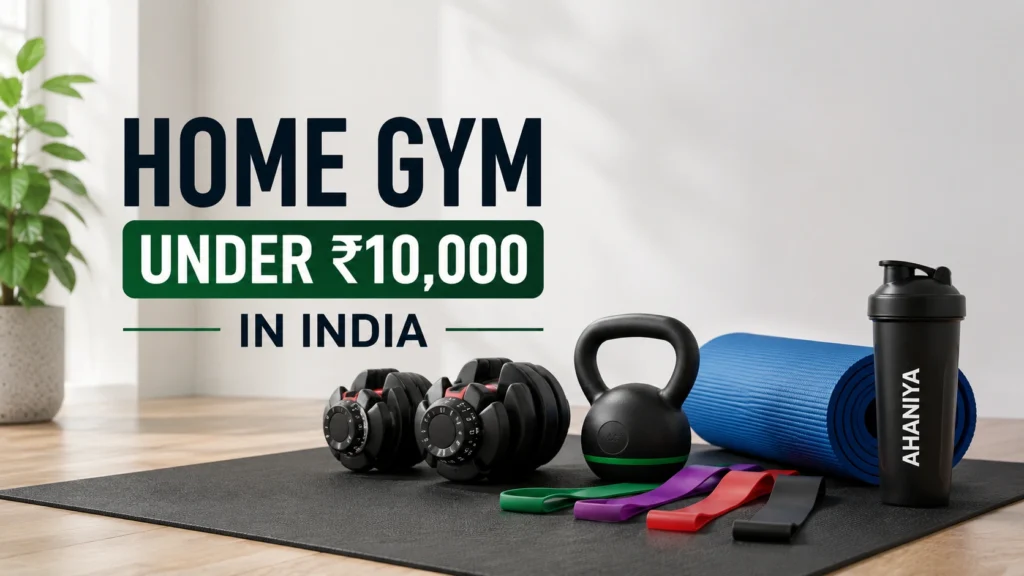
If you're building your first home setup, our home gym under Rs 10,000 guide shows exactly how a kettlebell fits into a complete budget build. When you're ready to get yours, the Ahaniya cast iron kettlebell is built for home use with a textured grip handle that performs on Indian floor surfaces.
What Weight Kettlebell Should Beginners Use?
Starting too heavy is the most common beginner mistake. It forces compensations, breaks technique, and leads to lower back strain. Starting light and nailing form first is always faster progress in the long run.
Here is a simple weight selection guide for Indian beginners:
|
Who
|
Recommended Weight
|
Notes
|
|
Women beginners
|
6 to 8 kg
|
Safe starting point for most exercises
|
|
Men beginners
|
8 to 12 kg
|
Allows full hip hinge movements safely
|
|
Already active (women)
|
8 to 12 kg
|
Step up once form is solid
|
|
Already active (men)
|
12 to 16 kg
|
Demands better technique
|
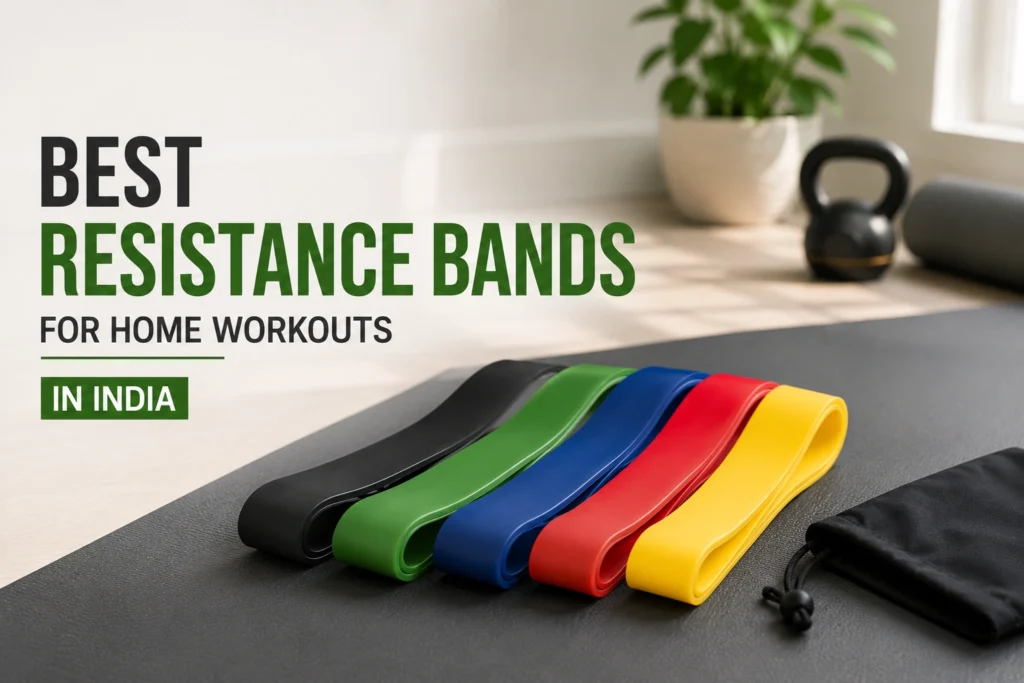
If you're already training regularly with bodyweight or resistance bands (see our resistance band workout for beginners guide), move one step up from the beginner recommendation. The cast iron kettlebell from Ahaniya is available in multiple weights to match your starting point.
10 Kettlebell Exercises for Beginners (Step-by-Step)
These 10 exercises are ordered from easiest to most complex. Work through them in sequence. Once you can complete 3 sets of the recommended reps with clean form, move to the next exercise.
1. Kettlebell Deadlift
Muscles worked: Glutes, hamstrings, lower back, core
How to do it:
- Place the kettlebell on the floor between your feet, feet hip-width apart.
- Push your hips back and hinge at the waist, keeping your back flat and core braced.
- Grip the handle with both hands, arms straight.
- Press through your heels and stand up tall, squeezing your glutes at the top.
- Lower the kettlebell back to the floor with control and repeat.
Sets and Reps: 3 sets x 10 reps
Common mistake to avoid: Rounding the lower back. Keep your chest up and spine neutral throughout the entire movement.
Home gym tip: Place your kettlebell on your yoga mat so it sits stable and doesn't slide on marble floors.
2. Kettlebell Goblet Squat
Muscles worked: Quadriceps, glutes, hamstrings, core
How to do it:
- Hold the kettlebell by the horns (the vertical sides of the handle) close to your chest.
- Stand with feet slightly wider than shoulder-width, toes pointed slightly out.
- Push your knees out and lower your hips down into a squat, keeping your chest upright.
- Go as deep as you comfortably can while maintaining a flat back.
- Drive through your heels to return to standing.
Sets and Reps: 3 sets x 10 reps
Common mistake to avoid: Letting the chest fall forward as you descend. Keep the kettlebell tight to your chest the whole way down.
Home gym tip: Perform on your yoga mat and use the edge of the mat as a guide for foot placement consistency.
3. Kettlebell Romanian Deadlift
Muscles worked: Hamstrings, glutes, lower back
How to do it:
- Stand holding the kettlebell with both hands in front of your hips, feet hip-width apart.
- With a slight bend in your knees, push your hips back and hinge forward.
- Lower the kettlebell down your legs, keeping it close to your body.
- Stop when you feel a strong stretch in your hamstrings, typically when the bell reaches mid-shin.
- Drive your hips forward to return to standing and squeeze your glutes at the top.
Sets and Reps: 3 sets x 10 reps
Common mistake to avoid: Squatting down instead of hinging. This is a hip hinge movement, not a squat. Your knees should barely bend.
Home gym tip: Stand on your mat to give your feet grip and define a clear standing position on tiled floors.
4. Kettlebell Bent-Over Row
Muscles worked: Upper back, lats, rear deltoids, biceps
How to do it:
- Stand with feet hip-width apart, holding the kettlebell in your right hand.
- Hinge forward at the hips until your torso is roughly parallel to the floor, resting your left hand on a chair or wall for support.
- Let the kettlebell hang at arm's length below your shoulder.
- Drive your right elbow up toward the ceiling, pulling the kettlebell to your hip.
- Lower with control and complete all reps before switching sides.
Sets and Reps: 3 sets x 10 reps each side
Common mistake to avoid: Rotating the torso to help the weight up. Keep your shoulders square and let only your arm do the pulling.
Home gym tip: A chair at the right height makes an excellent support surface in any Indian home gym corner.
5. Kettlebell Shoulder Press
Muscles worked: Shoulders, triceps, upper chest, core
How to do it:
- Hold the kettlebell in your right hand at shoulder height in the rack position, elbow tucked close to your body.
- Brace your core and press the kettlebell straight overhead until your arm is fully extended.
- Keep your wrist straight and your bicep close to your ear at the top.
- Lower the kettlebell slowly back to the rack position.
- Complete all reps on one side before switching.
Sets and Reps: 3 sets x 8 reps each side
Common mistake to avoid: Arching the lower back to compensate for tight shoulders. Brace your core hard and squeeze your glutes before each press.
Home gym tip: Perform near a wall to check your pressing path stays vertical and doesn't drift forward.
6. Kettlebell Sumo Squat
Muscles worked: Inner thighs, glutes, quadriceps, hamstrings
How to do it:
- Stand with feet wider than shoulder-width apart, toes turned out at roughly 45 degrees.
- Hold the kettlebell with both hands by the handle, letting it hang between your legs.
- Lower your hips straight down, keeping your chest upright and knees tracking over your toes.
- Go until your thighs are roughly parallel to the floor.
- Press through both feet to return to standing.
Sets and Reps: 3 sets x 12 reps
Common mistake to avoid: Letting the knees cave inward. Actively push your knees out throughout the entire movement.
Home gym tip: Mark your foot position with small pieces of tape on your mat so your stance stays consistent every session.
7. Kettlebell Swing
Muscles worked: Glutes, hamstrings, core, shoulders, back (full body)
How to do it:
- Stand with feet shoulder-width apart, kettlebell on the floor about a foot in front of you.
- Hinge at the hips, grip the handle with both hands, and hike the kettlebell back between your legs.
- Drive your hips forward explosively, squeezing your glutes hard as the kettlebell swings up to chest height.
- Keep your arms relaxed. The power comes from your hips, not your shoulders.
- Let the kettlebell swing back between your legs and repeat the hip hinge to start the next rep.
Sets and Reps: 3 sets x 15 reps
Common mistake to avoid: Using your arms to pull the bell up. This is a hip-drive exercise entirely. Your arms are just the connection point.
Home gym tip: Give yourself at least 1.5 metres of clear space in front before swinging. Clear the area before your first rep.
8. Kettlebell Lunge
Muscles worked: Quadriceps, glutes, hamstrings, calves, core
How to do it:
- Stand tall holding the kettlebell in your right hand, arm by your side.
- Step your right leg back and lower your hips until both knees are at roughly 90 degrees.
- Keep your front knee directly above your front ankle, chest upright.
- Push through your front foot to return to standing.
- Complete all reps on one side, then switch the kettlebell to the other hand and step back with the left leg.
Sets and Reps: 3 sets x 10 reps each side
Common mistake to avoid: Letting the front knee drift inward. Focus on keeping the knee tracking directly over the middle of your foot.
Home gym tip: Do lunges on your yoga mat where you have better grip. Marble floors and bare feet during lunges is a slip risk.
9. Kettlebell Russian Twist
Muscles worked: Obliques, deep core, transverse abdominis
How to do it:
- Sit on the floor with knees bent and feet flat, holding the kettlebell with both hands in front of your chest.
- Lean back slightly so your torso is at roughly a 45-degree angle.
- Lift your feet a few centimetres off the floor for an added challenge (keep feet down if you're just starting).
- Rotate your torso to the right, lowering the kettlebell toward the floor beside your hip.
- Rotate back through the centre to the left side. That is one full rep.
Sets and Reps: 3 sets x 12 reps each side
Common mistake to avoid: Moving only your arms while the torso stays still. The rotation should come from your entire trunk, not just your hands.
Home gym tip: Sit on your yoga mat so your tailbone has cushioning on hard Indian floor tiles.
10. Kettlebell Clean
Muscles worked: Glutes, hamstrings, upper back, shoulders, forearms
How to do it:
- Stand over the kettlebell, feet shoulder-width apart.
- Hinge at the hips and grip the handle with one hand, thumb pointing back.
- Drive your hips forward explosively as you pull the kettlebell up, keeping it close to your body.
- As the bell rises to shoulder height, rotate your forearm under it so the bell lands softly in the rack position against your forearm and shoulder.
- Lower the kettlebell back to the floor with control and repeat. Switch sides after all reps.
Sets and Reps: 3 sets x 6 reps each side (focus on technique, not reps)
Common mistake to avoid: Letting the kettlebell swing out wide away from your body. Keep it close to your torso the entire way up.
Home gym tip: Learn the clean in front of a mirror or reflective surface to check that the bell path stays tight to your body.
Sample 20-Minute Kettlebell Workout for Beginners
This circuit uses 5 of the 10 exercises above. Complete all 5 exercises back to back with the rest noted, then repeat for 3 rounds. Total time: approximately 20 minutes.
|
Exercise
|
Sets
|
Reps
|
Rest
|
|
Kettlebell Deadlift
|
3
|
10
|
45 seconds
|
|
Kettlebell Goblet Squat
|
3
|
10
|
45 seconds
|
|
Kettlebell Swing
|
3
|
15
|
60 seconds
|
|
Kettlebell Bent-Over Row
|
3
|
10 each side
|
45 seconds
|
|
Kettlebell Russian Twist
|
3
|
12 each side
|
45 seconds
|
Rest 2 minutes between each full round. In your first week, 2 rounds is enough. Add the third round once you can complete 2 rounds without your form breaking down.
This circuit pairs well with the programme outlined in our resistance band workout for beginners guide on alternate days for a complete weekly training split.
Safety Tips for Kettlebell Training at Home
Kettlebells are safe when used correctly. Most injuries from home kettlebell training come from skipping the basics. Here are the ones that matter most for Indian home gym conditions:
- Always warm up first. 5 to 10 minutes of bodyweight squats, hip circles, and arm swings prepares your joints before any loaded movement.
- Never train on slippery floors. Indian marble and tile floors become dangerous under foot pressure. Always use a yoga mat under your feet for every exercise.
- Keep your back flat on all hip hinge movements. The deadlift, Romanian deadlift, swing, and row all require a neutral spine. Rounding the lower back under load is the most common cause of injury.
- Start lighter than you think you need to. A week of practice with a lighter weight builds the motor patterns that protect you when you go heavier.
- Do not train to failure when training alone. In a home gym without a spotter, failing a rep means the kettlebell drops. Stop 2 to 3 reps before complete failure.
For a complete guide on training safely without supervision, our how to avoid injuries with home gym equipment guide covers every common mistake and how to correct it before it becomes a problem.
Conclusion
A single kettlebell and a clear space to stand in is enough to build real strength, improve fitness, and make a visible change in how your body looks and performs. The 10 exercises in this guide are not beginner exercises in a lesser sense. They are the foundation movements that experienced kettlebell practitioners return to for years.
Start with the deadlift. Get the hip hinge right. Then work through the list in order. By the time you reach the clean, your movement quality will have improved in ways that carry over into everything else you do physically.
Get your cast iron kettlebell from Ahaniya and start with the 20-minute beginner circuit in Section 4. Browse the full strength training equipment range when you're ready to build around it.
Frequently Asked Questions
1. Can I lose weight with kettlebell exercises at home?
Yes, and kettlebells are particularly effective for fat loss because they combine strength and cardiovascular work in the same session. The kettlebell swing, for example, elevates your heart rate to levels comparable to a moderate run while simultaneously working your glutes, hamstrings, and core. Research consistently shows that compound movements burn more calories than isolation exercises. Combine consistent kettlebell training with appropriate nutrition and fat loss follows. You do not need a treadmill or cardio machine to achieve meaningful calorie burn at home.
2. How many days a week should a beginner do kettlebell workouts?
3 days per week with a rest day between sessions is the right starting point. This gives your muscles time to recover and adapt between sessions, which is where the actual strength gains happen. A sample structure: Monday, Wednesday, and Friday for kettlebell training, with Tuesday and Thursday for light walking or stretching. After 6 to 8 weeks of consistent training, you can add a fourth session. Do not train the same muscle groups on consecutive days.
3. Is kettlebell training safe for back pain?
Mild, non-acute lower back discomfort can actually improve with kettlebell training when technique is correct, because the hip hinge movements strengthen the glutes and hamstrings that support the lower back. However, if you have a diagnosed spinal condition, a disc injury, or acute back pain, consult a physiotherapist before beginning any kettlebell programme. Start with the deadlift and goblet squat, which are lower-risk movements for back sensitivity. Avoid the swing and clean until your technique on the fundamental hinges is solid.
4. What is the best kettlebell weight to start with in India?
For most Indian men beginning kettlebell training, 8 to 12 kg is the recommended starting range. For most women, 6 to 8 kg. If you're already active through sports, yoga, or gym training, go one step up. The Ahaniya cast iron kettlebell is available in multiple weights to match your starting point. When in doubt, go lighter. A lighter weight with correct technique will build more strength faster than a heavier weight with poor form.
5. Can I do a full body workout with just one kettlebell?
Absolutely. The 10 exercises in this guide cover every major muscle group: legs (deadlift, goblet squat, lunge, sumo squat), posterior chain (Romanian deadlift, swing), back (bent-over row), shoulders and arms (shoulder press, clean), and core (Russian twist). One kettlebell is genuinely enough for a complete beginner and intermediate programme. When you're ready to expand your setup, our home gym equipment collection shows what to add next.
6. What is the best beginner kettlebell workout?
The 20-minute circuit in Section 4 of this guide is designed specifically for beginners. It uses 5 of the safest and most effective kettlebell exercises: deadlift, goblet squat, swing, bent-over row, and Russian twist. 3 rounds with the rest periods noted gives you a complete full-body session. As a general principle, start with 2 rounds and build to 3 over your first two weeks.
7. Are kettlebells good for bone density?
Yes. Resistance training that loads the skeleton, which includes all weight-bearing kettlebell exercises, stimulates bone remodelling and has been shown to improve bone mineral density. This is particularly relevant for women over 30 and anyone with a sedentary lifestyle. Hip hinge movements like the deadlift and swing load the spine and hips, two areas where bone density loss tends to begin earlier. This is one of the long-term health benefits that goes beyond visible fitness results.
8. Is a 10 minute kettlebell workout effective?
A 10-minute kettlebell session can be highly effective if it's structured as a high-intensity circuit. 10 rounds of 30 seconds on, 30 seconds off using the kettlebell swing alone will deliver a meaningful cardiovascular and muscular stimulus. For strength development specifically, 10 minutes is short, but for conditioning and fat loss, interval-based 10-minute sessions are far more productive than 10 minutes of steady-state cardio. As your fitness builds, extend sessions to 20 minutes using the circuit in this guide.
9. Can I lose belly fat with a kettlebell?
No single exercise targets belly fat specifically. Fat loss happens across the body based on overall calorie deficit. However, kettlebell training is among the most effective tools for creating that calorie deficit because it combines strength and cardio work simultaneously. Regular kettlebell training also builds the core muscles underneath the fat, which improves posture and appearance independently of fat loss. Combined with good nutrition, consistent kettlebell training absolutely contributes to reduced belly fat over time.