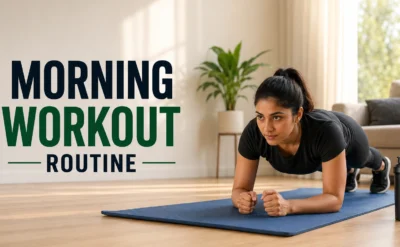
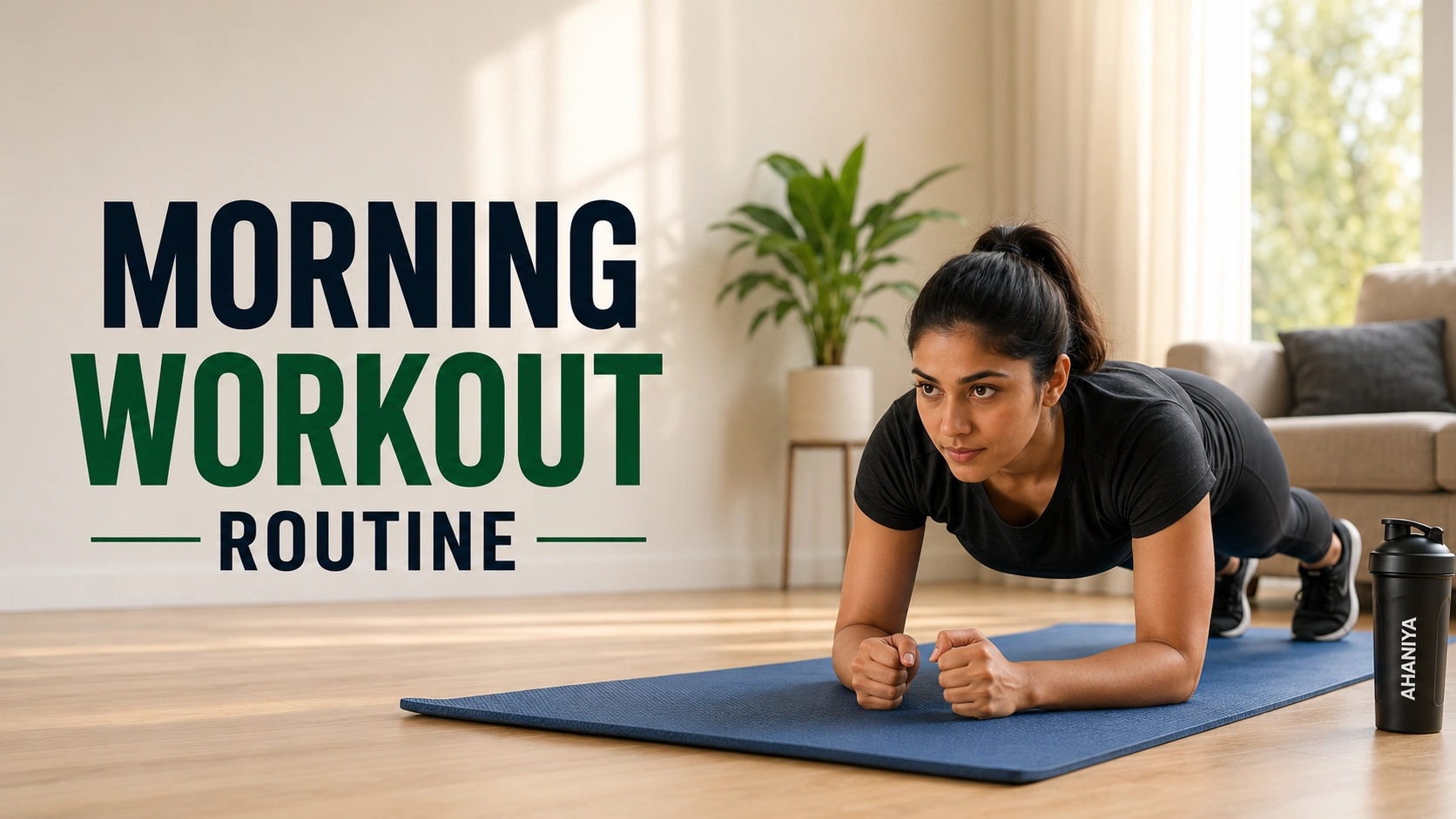
Most working Indians wake up with one though that there is not enough time. Between early office hours, household chores, and long commutes, a gym visit simply does not fit. Take Priya, a 28-year-old from Pune who works from 9 to 7 and always said she would start exercising next week. She finally started a 20-minute morning routine at home, no equipment, no membership, just her living room floor.
Within a month, she had more energy, slept better, and lost 2 kg. In this guide, you will find a simple, beginner-friendly morning workout routine for home use in India, a warm-up, a full 20-minute circuit, a cool-down, and everything you need to get started today.
Why Morning Workouts Work Better for Most Indians
The biggest reason morning workouts have a higher success rate is simple: the day has not started yet. No meetings, no calls, no family demands. You complete the workout before anything else can get in the way. For most Indians juggling work and home responsibilities, evenings are unpredictable. Mornings are not.
Working out on an empty stomach, as most morning workouts happen, also nudges your body to use stored fat for energy rather than recently consumed carbohydrates. You do not need to go deep into nutrition science here. The point is: morning workouts are easier to stay consistent with, and consistency is what produces results. Even 20 minutes done regularly beats 60 minutes done once a week.
Before You Start: 5-Minute Warm-Up
Never skip the warm-up. Cold muscles are tight muscles, and jumping straight into squats or push-ups without warming up is a common reason beginners end up with sore knees or pulled muscles. Spend five minutes on this simple sequence before every session:
- Neck rolls: 30 seconds. Slowly roll your neck in a full circle, 5 times clockwise, 5 times anti-clockwise. Relieves overnight stiffness.
- Shoulder circles: 30 seconds. Roll both shoulders forward 10 times, then backward 10 times. Opens up the upper back.
- Hip circles: 30 seconds. Hands on hips, rotate in wide circles. 10 each direction. Loosens the lower back.
- Leg swings: 30 seconds each leg. Hold a wall for balance and swing each leg forward and back in a controlled motion. Activates the hip flexors.
- Jumping jacks: 1 minute. Gets the heart rate up and warms the whole body. If you live in an apartment and noise is a concern, do step jacks instead: step one foot out at a time instead of jumping.
20-Minute Beginner Morning Workout Routine
This circuit covers your full body: legs, upper body, core, and cardio. Complete the circuit once in Week 1 and 2. As you get stronger, work up to two rounds. A blue yoga mat makes the floor exercises significantly more comfortable, especially for exercises like glute bridges and supermans on Indian marble or tile floors.
|
Exercise
|
Duration
|
Rest
|
Muscles Worked
|
|
1. Jumping Jacks
|
45 sec
|
15 sec
|
Full body, cardio warm-up
|
|
2. Knee Push-ups
|
30 sec
|
15 sec
|
Chest, shoulders, triceps
|
|
3. Bodyweight Squats
|
45 sec
|
15 sec
|
Quads, glutes, hamstrings
|
|
4. Mountain Climbers
|
30 sec
|
15 sec
|
Core, shoulders, cardio
|
|
5. Glute Bridges
|
45 sec
|
15 sec
|
Glutes, hamstrings, lower back
|
|
6. Plank Hold
|
30 sec
|
15 sec
|
Core, shoulders, full body
|
|
7. High Knees
|
45 sec
|
15 sec
|
Legs, core, cardio
|
|
8. Tricep Dips (chair)
|
30 sec
|
15 sec
|
Triceps, shoulders
|
|
9. Superman Hold
|
30 sec
|
15 sec
|
Lower back, glutes, shoulders
|
|
10. Slow Bodyweight Lunges
|
45 sec
|
15 sec
|
Quads, glutes, balance
|
Total circuit time: Approximately 12 to 15 minutes for one round. Add the 5-minute warm-up and 5-minute cool-down for a complete 20 to 25 minute morning session.
Exercise Form Notes
1. Jumping Jacks
Stand with feet together and arms at your sides. Jump both feet out wide while raising your arms overhead, then jump back to the start. Keep the movement controlled. For apartment use, step one foot out at a time to reduce floor impact.
2. Knee Push-ups
Start on all fours, lower your knees to the ground, and keep your body in a straight line from knees to shoulders. Lower your chest toward the floor, elbows at roughly 45 degrees, then push back up. This is the beginner-friendly version. As you get stronger, move to full push-ups with feet on the floor.
3. Bodyweight Squats
Stand with feet shoulder-width apart, toes pointed slightly outward. Push your hips back and bend your knees as if you are sitting down in a chair. Keep your chest up and your heels flat on the floor. Lower until your thighs are parallel to the floor, then stand back up.
4. Mountain Climbers
Start in a high plank position with hands directly under your shoulders. Drive your right knee toward your chest, then quickly switch legs in a running motion. Keep your hips level and your core tight throughout. Slow down the pace if needed to maintain form.
5. Glute Bridges
Lie on your back with knees bent and feet flat on the floor, arms at your sides. Push through your heels and lift your hips off the ground until your body forms a straight line from shoulders to knees. Squeeze your glutes at the top, hold for one second, then lower back down. A blue yoga mat makes this exercise considerably more comfortable on hard floors.
6. Plank Hold
Place your forearms on the floor with elbows directly under your shoulders. Keep your body in a straight line from head to heels. Do not let your hips sag or rise. Breathe steadily and hold. Thirty seconds is the goal for beginners.
7. High Knees
Stand upright and run in place, driving your knees as high as your hip level with each step. Pump your arms in rhythm. This is a high-intensity cardio burst that keeps the heart rate elevated. Reduce the pace but keep moving if you feel winded.
8. Tricep Dips (Using a Chair)
Sit on the edge of a sturdy chair with your hands gripping the seat beside your hips. Slide your hips off the edge, supporting your weight on your hands. Lower your body by bending your elbows to about 90 degrees, then press back up. Keep your back close to the chair throughout.
9. Superman Hold
Lie flat on your stomach with arms extended in front of you and legs straight behind. Keeping your neck neutral, slowly lift your arms, chest, and legs off the floor simultaneously. Hold for two seconds at the top, then lower back down. This strengthens the lower back, which is a common weak spot for people who sit for long hours.
10. Slow Bodyweight Lunges
Stand tall and step your right foot forward. Lower your body until your front thigh is parallel to the floor and your back knee is close to the ground. Push through your front heel to return to standing, then repeat on the left side. Going slow adds more challenge and reduces the risk of knee strain.
Cool Down: 5 Minutes
Skipping the cool-down is the number one mistake beginners make. After any workout, your heart rate is elevated, your muscles are warm and slightly contracted, and your body needs a gradual transition back to a resting state. Skipping this step increases next-day soreness and makes it harder to get out of bed and repeat the routine tomorrow.
Work through this 5-minute stretching sequence after every session:
- Child's Pose: Kneel on the floor, sit back on your heels, and stretch your arms forward on the ground. Hold for 45 seconds. Releases the lower back and hips.
- Seated Hamstring Stretch: Sit on the floor with legs straight out. Reach toward your toes and hold for 30 seconds each side. Targets the hamstrings tightened by squats and lunges.
- Chest Opener: Stand and clasp your hands behind your back. Gently squeeze your shoulder blades together and lift your arms slightly. Hold for 30 seconds. Counters the forward rounding from push-ups.
- Seated Forward Fold: Sit with both legs straight, then gently fold your upper body forward and hold for 45 seconds. Lengthens the spine and the back of the legs.
How to Progress This Routine Over Time
The goal is to make this routine progressively more challenging as your body adapts. Here is a simple 8-week progression plan:
Week 1 to 2: One Round, Learn the Form
Do the circuit once. Focus entirely on getting the form right for each exercise rather than speed. Rest up to 30 seconds between exercises if needed. Two to three days per week is a good starting target.
Week 3 to 4: One Round, Less Rest
Reduce the rest between exercises to 15 seconds. Complete the circuit without stopping where possible. Aim for four days per week. You should notice increased energy and less breathlessness during the session.
Month 2: Two Rounds and Add Resistance Bands
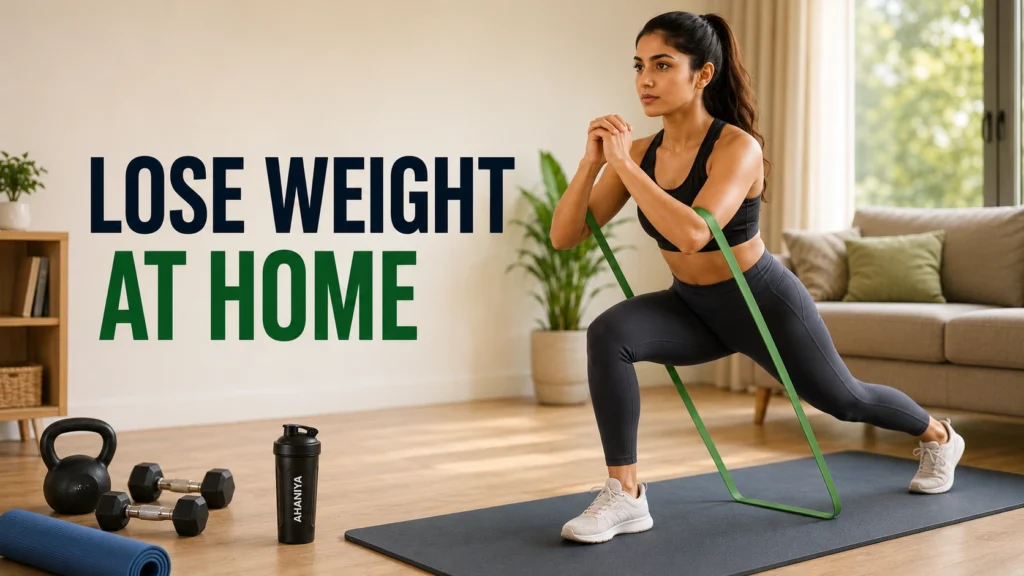
Complete the circuit twice with a 60-second rest between rounds. This is also the right time to add resistance bands to your routine. Loop a resistance band just above your knees during squats and glute bridges to activate the glutes more effectively. Add a band to your lunges for extra resistance. Our resistance band workout for beginners guide covers exactly how to do this.
Month 3 and Beyond: Full Push-ups, Increase Reps
Replace knee push-ups with full push-ups. Increase each exercise duration by 10 to 15 seconds. Consider adding a second workout session later in the day if your schedule allows. When you are ready for the next level, check out our guide on home gym equipment for beginners to see what to add to your setup.
What Equipment Will Make This Routine Even Better
This entire routine works with zero equipment. That is the point. But two affordable items make a real difference to comfort and results:
1. Yoga Mat
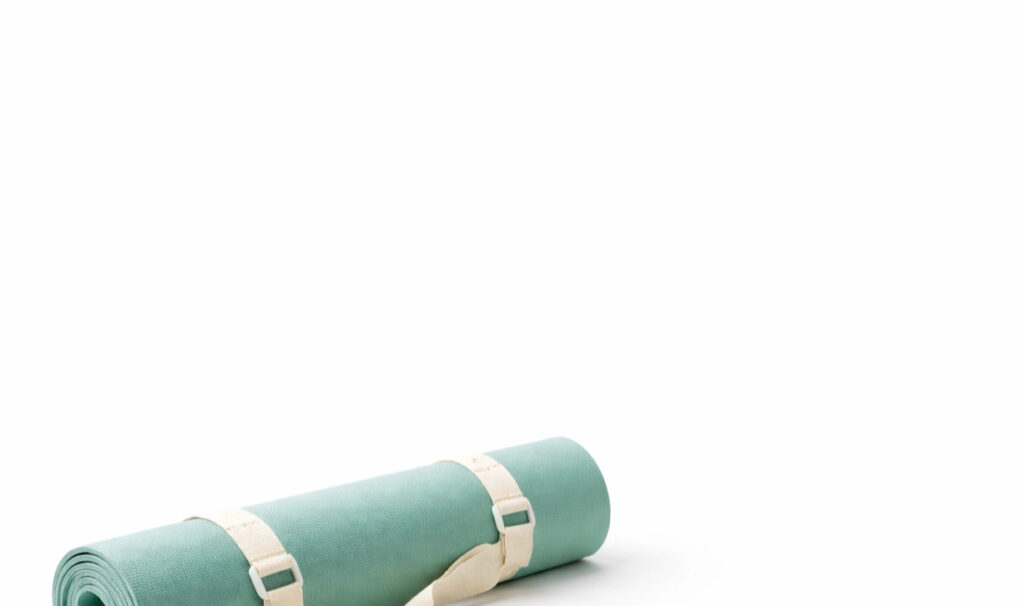
Indian homes typically have marble or ceramic tile floors. Without a mat, floor exercises like glute bridges, supermans, and planks become uncomfortable quickly. A good mat also prevents slipping during high-knees and jumping jacks. Ahaniya's blue yoga mat is designed for Indian home conditions, with a dual anti-slip surface that grips both the floor and your hands and feet.
2. Resistance Bands
Once you have completed Week 4, resistance bands add progressive challenge to squats, glute bridges, and lunges without needing dumbbells or a gym. They are compact, silent (no noise for neighbours), and affordable. Ahaniya's resistance bands for men and women come in multiple resistance levels so you can progress over time.
|
Total cost of your home workout setup
Yoga mat + resistance bands = Rs. 700 to Rs. 1,500. That is a complete home workout setup for less than two weeks of a gym membership. Both items fit in a single drawer when not in use.
|
Conclusion
The hardest part of any fitness routine is Day 1. Everything after that gets easier.
This routine asks for 20 to 30 minutes of your morning, no gym, no equipment, no commute. Just floor space and the decision to start. Follow the warm-up, complete the circuit, stretch properly at the end, and repeat. The results come from showing up, not from doing anything complicated.
When you are ready to add to your setup, Ahaniya's blue yoga mat and resistance bands are the two most practical next steps. And when you are ready to build a more complete home gym, explore Ahaniya's full range of home gym equipment to take your training to the next level.
Frequently Asked Questions
1. Is 20 minutes of morning workout enough to lose weight?
Yes, if done consistently. Twenty minutes of a structured circuit like this one burns between 150 and 250 calories depending on your weight and effort level. Combined with a reasonably balanced diet, daily 20-minute sessions produce visible results over 4 to 8 weeks. The key word is daily. Sporadic 60-minute sessions are less effective than consistent 20-minute ones.
2. Should I eat before a morning workout in India?
For a 20-minute beginner routine, you do not need to eat beforehand. Drink a glass of water when you wake up, wait 5 to 10 minutes, then start your warm-up. Your body has enough stored energy for a short session. If you feel weak or dizzy, have a small banana or a few soaked almonds before starting.
3. How many days a week should I do this routine?
Start with 3 days per week in Week 1 and 2, with a rest day between each session. From Week 3 onwards, move to 4 to 5 days per week. By Month 2, most beginners can handle 5 days per week comfortably. Two rest days per week are important for muscle recovery, especially early on.
4. Can this routine help reduce belly fat?
Yes, but not by targeting belly fat specifically. The body does not burn fat from one specific area. What this routine does is increase your overall calorie burn, build metabolic muscle, and raise your resting metabolism over time. This leads to fat loss across the whole body, including the belly. The circuit is designed with cardio-heavy exercises like high knees, jumping jacks, and mountain climbers specifically to maximise calorie burn.
5. Is it okay to do this workout every day?
For the first two weeks, take at least one rest day between sessions. Your muscles need 24 to 48 hours to recover and grow stronger. From Week 3 onwards, you can move to 5 consecutive days with a 2-day rest period. Doing this routine 7 days a week without rest will slow your progress rather than speed it up.