Some families also use a Karwa Chauth calendar, a decorated cloth, a small wooden platform or a traditional puja book. Follow the items required by your family's custom rather than assuming every household needs the same things.
Karwa Chauth Puja Vidhi: Step-by-Step Guide
The evening puja is an important part of the festival. If this is your first Karwa Chauth, the following steps explain a common North Indian practice. Your family's method may differ.
Step 1: Prepare the Puja Area
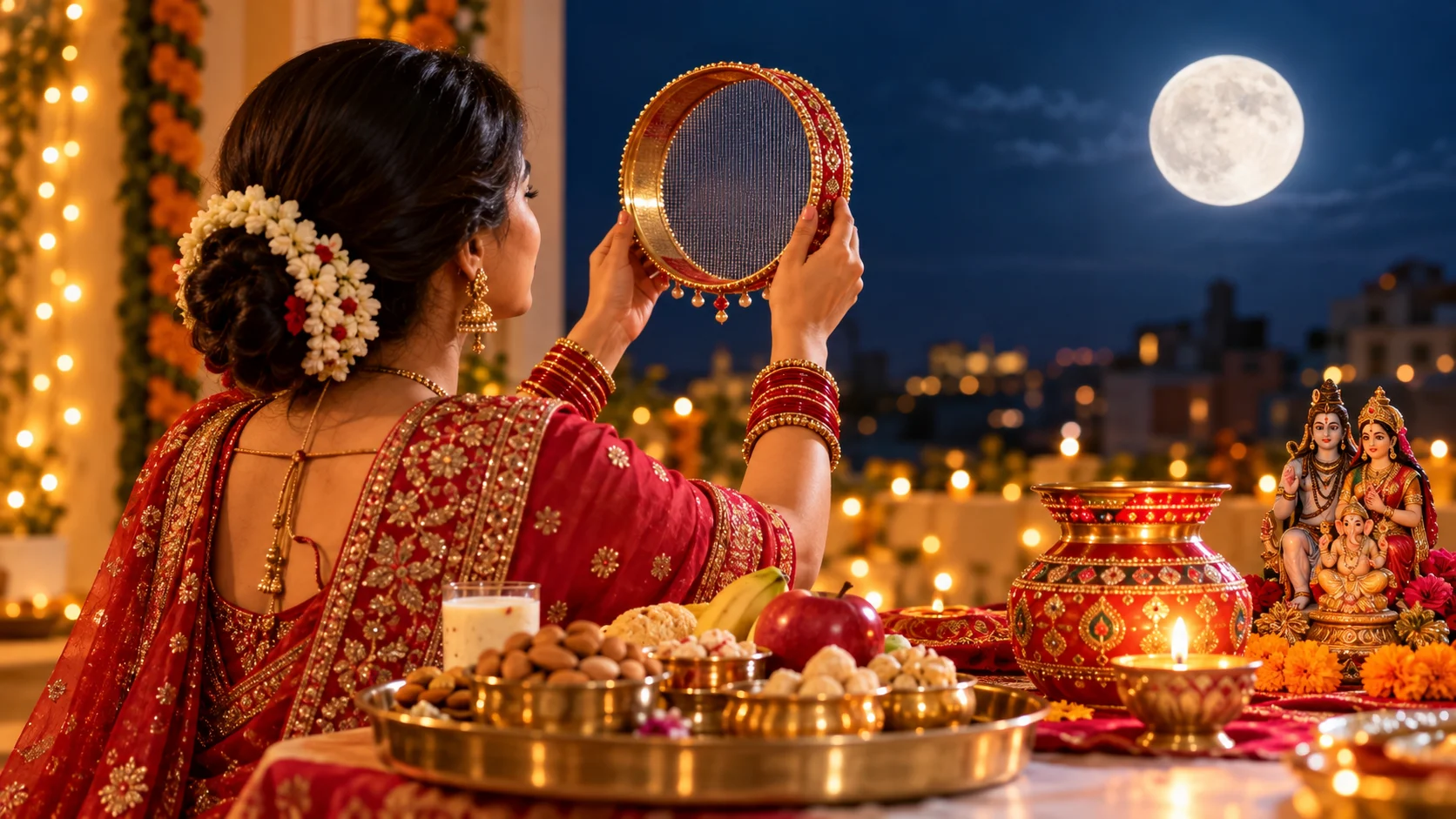
Clean the area where the puja will take place. Arrange the idols or pictures, puja thali, karwa, diya, flowers and other items according to your family tradition.
Step 2: Dress for the Occasion
Many women wear traditional clothes such as a saree, suit or lehenga. Red, maroon, pink, orange and gold are popular festive colours, but there is no single colour that everyone must wear.
Mehendi, bangles, sindoor and jewellery may also be part of the celebration.
Step 3: Offer Prayers
Families commonly worship Lord Ganesha, Goddess Parvati and Lord Shiva as part of their Karwa Chauth observance. Offer flowers, apply tilak and light the diya according to your usual puja practice.
Step 4: Listen to the Karwa Chauth Vrat Katha
The Vrat Katha is a traditional story associated with the festival. One widely known version tells the story of Queen Veeravati. Other regional versions and stories may also be followed.
You can listen to the Katha with family members or read it from your family's preferred religious text.
Step 5: Complete the Family Rituals
Some communities include the exchange or passing of karwas, group prayers or other customary steps. Follow the practice observed in your family or community.
Step 6: Wait for Moonrise
After the evening puja, wait for the moon to rise. The moonrise time depends on your location, so check the local timing before the festival.
What Are Solah Shringar and Baya?
Solah Shringar
Solah Shringar refers to traditional forms of adornment associated with married women and festive occasions. The items may include mehendi, bangles, bindi, sindoor, jewellery, a saree or other traditional clothing.
The exact list and its meaning can vary by region and family. Many women enjoy getting ready as part of the celebration, while others keep their observance simple.
Baya
Baya is a traditional gift given in some families, often by the woman's parents to her mother-in-law or other elders. It may include clothes, sweets, dry fruits or other items.
The exchange of gifts differs between communities. It is a family custom rather than a requirement that every household must follow in the same way.
Moon-Sighting Ritual: How Is the Karwa Chauth Fast Broken?
The moon-sighting ritual is one of the best-known parts of Karwa Chauth. It usually takes place after the evening puja, when the moon becomes visible.
A common sequence is:
- Wait for the moon to rise in your location.
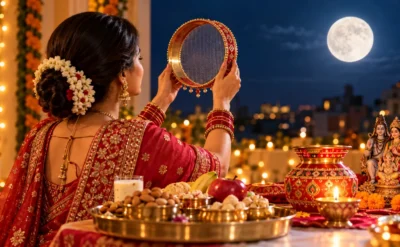
- Look at the moon, often through a chalni or sieve.
- Look at the husband through the sieve or directly, according to family custom.
- Offer arghya, or water, to the moon.
- Complete the prayers and other family rituals.
- Break the fast according to your family's practice.
In many households, the husband offers the first sip of water or a small bite of food to his wife. Other families follow a different sequence.
If clouds hide the moon, ask your family or local religious guide how your community observes the ritual in that situation. Do not assume that every family follows the same alternative practice.
What Should You Eat After Breaking the Karwa Chauth Fast?
After a long period without food or water, you may feel very hungry or thirsty. It is sensible to take your time when ending the fast.
Consider these practical steps:
- Start with small sips of water if you have been fasting without fluids and can safely drink.
- Eat slowly rather than rushing into a very large meal.
- Choose a meal that includes a source of protein, carbohydrates and other nutritious foods.
- Include foods you usually tolerate well.
- Avoid eating far beyond your comfort level.
- Rest if you feel tired after the day's observance.
A home-cooked meal may include roti, dal, vegetables, curd or another combination that suits your dietary preferences. There is no single meal that everyone must eat after Karwa Chauth.
If you feel faint, confused, unusually weak or seriously unwell, seek medical help rather than continuing the fast for the sake of completing a ritual.
Can Everyone Observe a Nirjala Fast?
No. A strict waterless fast is not suitable for everyone.
People with diabetes, kidney disease, certain heart conditions or other medical concerns may face additional risks. Pregnancy, breastfeeding, older age and medicines that require food or fluids can also affect whether fasting is safe.
If you are unsure whether you should fast, speak to a healthcare professional before Karwa Chauth. Do not change your prescribed medication schedule without medical advice.
The purpose of this section is not to change anyone's religious practice. It is to help readers understand that health needs differ and that medical concerns should be taken seriously.
Simple Ways to Make Your First Karwa Chauth Easier to Plan
If you are observing Karwa Chauth for the first time, keep the preparations simple.
- Confirm the local date and timings.
- Ask your family which rituals they follow.
- Prepare your Sargi and puja items the day before.
- Choose clothes and accessories in advance.
- Get enough sleep before the early start.
- Understand any health concerns before deciding how to fast.
- Allow enough time for the evening puja and moon-sighting ritual.
If you also want to maintain your usual fitness routine outside the festival, you can explore home gym equipment for everyday workouts. There is no need to add strenuous exercise to a day when you are fasting, particularly if you feel tired or unwell.
For more ideas about keeping a regular routine at home, see these practical tips on starting a morning workout routine for beginners.
Conclusion
Karwa Chauth is a day of prayer, family traditions and celebration for many households. From preparing Sargi before sunrise to completing the evening puja and moon-sighting ritual, each family may follow its own customs.
If this is your first Karwa Chauth, prepare the items in advance, confirm the local timings and ask your family about the traditions they follow. Give yourself enough time to rest and understand your health needs before deciding how to observe the fast.
At Ahaniya, we believe that everyday health habits should fit your needs and routine. As you prepare for Karwa Chauth 2026, enjoy the traditions while making informed choices about your well-being.
May your Karwa Chauth be filled with prayer, family time and happiness.
Frequently Asked Questions
1. When is Karwa Chauth in 2026?
Karwa Chauth falls on Thursday, 29 October 2026. The local puja muhurat and moonrise time depend on your city.
2. What time does the Karwa Chauth fast start?
In New Delhi, the listed Upavasa start time is 6:31 am on 29 October 2026. Many families eat Sargi before sunrise. Check your local timings and follow your family's custom.
3. What is Sargi, and who prepares it?
Sargi is a pre-dawn meal eaten before the Karwa Chauth fast. Traditionally, the mother-in-law often prepares or sends it to her daughter-in-law. Family practices can differ.
4. What should I eat in Sargi?
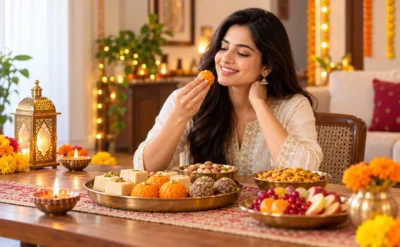
A Sargi thali may include fruit, nuts, whole grains, milk or curd, and traditional foods such as pheni, vermicelli, mathri or sweets. Choose a balanced meal that suits your needs and family traditions.
5. Can I drink water during Karwa Chauth?
In the traditional Nirjala fast, food and water are avoided until the fast is completed. However, a waterless fast may not be safe for everyone. If you have a medical concern, seek professional advice before fasting.
6. What is needed for Karwa Chauth puja?
Common items include a karwa, diya, puja thali, roli, rice, flowers, a chalni and water for the moon offering. Other items depend on your family and regional customs.
7. What is the Karwa Chauth Vrat Katha?
The Vrat Katha is a traditional story read or heard during the festival. The story of Queen Veeravati is one well-known version, though regional traditions may include different stories.
8. What happens during the moon-sighting ritual?
In a common tradition, women view the moon through a sieve, look at their husbands, offer water to the moon and complete their prayers. They then break the fast according to family custom.
9. What should I eat after Karwa Chauth fasting?
Start slowly with water if appropriate, then have a comfortable, balanced meal. Avoid rushing into a very large meal, and seek help if you experience serious symptoms after fasting.
10. Is Karwa Chauth only for newly married women?
No. Many married women observe Karwa Chauth each year. Some unmarried women also take part in certain traditions, depending on their family or community customs.
11. What if the moon is not visible on Karwa Chauth?
Cloud cover can make the moon difficult to see. Practices for this situation vary by family and community, so ask your family's religious guide or consult the local Panchang for guidance.
12. Can I exercise while observing Karwa Chauth?
Avoid strenuous activity if you are fasting, particularly without water. Consider your health, the weather and your usual activity level. Stop and seek help if you feel faint, dizzy or unwell.