Blog

How to Enjoy Diwali Sweets Without Losing Your Healthy Routine

happy diwali eating

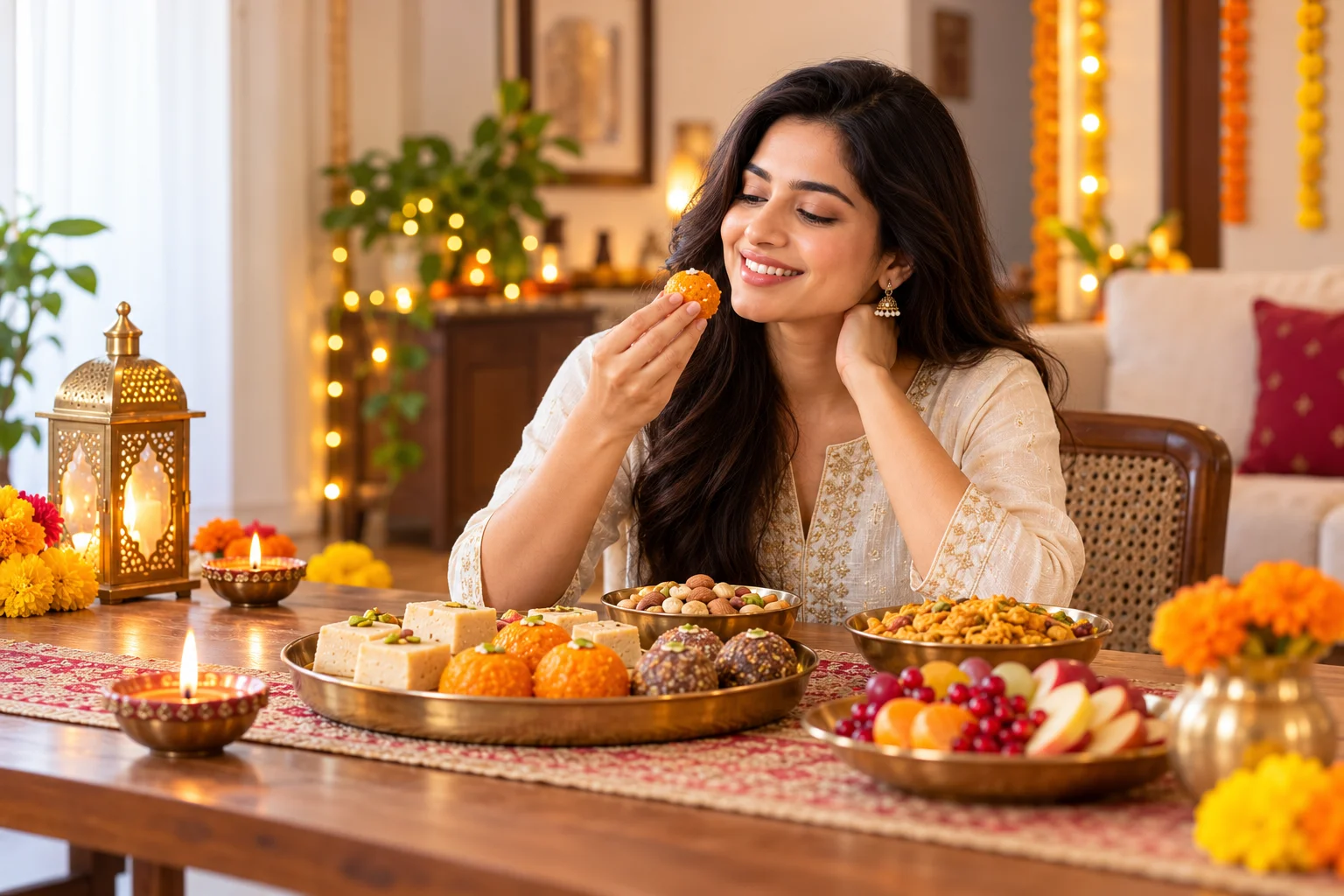
Diwali is a time for family gatherings, festive meals, gifts and traditional sweets. From laddoos and kaju katli to samosas, namkeen and homemade snacks, food is an important part of the celebration.

However, changes in meal timings, frequent snacking, late nights and less physical activity can make it harder to follow your usual routine.

The good news is that you do not need to avoid your favourite foods to make healthier choices during Diwali. A few practical habits can help you enjoy festive meals while paying attention to portion sizes, balanced nutrition, movement and rest.

If you are trying to build healthier habits, this guide explains how to enjoy Diwali sweets, plan your meals and stay active without following a strict festival diet.

Why Is Healthy Eating Difficult During Diwali?

Diwali celebrations often involve more food than usual. Sweets may be offered during family visits, snacks may be available throughout the day, and dinner may take place later than normal.

Some common challenges include:

  • Eating sweets and snacks throughout the day without noticing the total amount.
  • Skipping regular meals to save room for a large festive dinner.
  • Eating quickly during social gatherings.
  • Drinking fewer fluids than usual while staying busy.
  • Spending more time sitting and less time exercising.
  • Sleeping later because of celebrations and family visits.

These changes do not mean you have failed to maintain a healthy routine. What matters is your overall pattern of eating and activity, rather than one festive meal.

1. Enjoy Your Favourite Diwali Sweets in Sensible Portions

Traditional sweets are part of Diwali for many families. You can enjoy them without feeling that you must either avoid them completely or eat as much as possible before returning to your normal routine.

Try these simple approaches:

  • Choose the sweets you enjoy most instead of taking every option available.
  • Start with a small serving and decide whether you want more.
  • Share a box of sweets with family or friends.
  • Eat slowly and pay attention to taste and fullness.
  • Avoid eating directly from a large box or container.

For example, if kaju katli is your favourite, choose a portion you can enjoy rather than taking several different sweets simply because they are available.

Remember that portion size matters, but there is no single portion that suits everyone. Your dietary needs, health conditions and overall eating pattern also matter.

2. Are Some Diwali Sweets Healthier Than Others?

The nutritional value of a sweet depends on its ingredients, preparation method, serving size and recipe. Traditional sweets can contain varying amounts of sugar, ghee, milk solids, nuts and other ingredients.

The following table provides a general comparison, not a ranking of foods from best to worst.

Diwali Food What to Consider Practical Tip
Kaju Katli Often contains cashews and sugar Enjoy a portion that fits your needs.
Besan Laddoo Usually made with gram flour, ghee and sugar Check the serving size.
Gulab Jamun Commonly contains sugar syrup and fried dough Choose a smaller serving if preferred.
Jalebi Often fried and soaked in sugar syrup Enjoy occasionally in a manageable portion.
Dry Fruit Sweets May contain nuts, dates, sugar or other ingredients Check the full ingredient list.
Homemade Kheer Ingredients and sweetness vary by recipe Adjust the recipe to your preferences.
Fruit-Based Desserts Added sugar and cream can change the nutritional value Check the ingredients and portion size.

A sweet made with dates, honey or jaggery is not automatically low in sugar or calories. These ingredients can still contribute substantial amounts of sugar and energy.

You do not need to label foods as completely healthy or unhealthy. Focus on variety, portions and how your overall meals fit together.

3. Do Not Skip Meals to Compensate for Sweets

Skipping breakfast or lunch to make room for Diwali sweets can leave you very hungry later in the day. This may make it harder to notice when you have eaten enough.

Instead, maintain your usual meal pattern as much as possible.

A balanced meal can include:

  • Protein: Dal, beans, chickpeas, paneer, tofu, eggs or other suitable options.
  • Vegetables: Seasonal vegetables, cooked sabzi or salad.
  • Carbohydrates: Roti, rice, whole grains or other staple foods.
  • Other foods you enjoy: Include suitable sources of fats and other nutrients as part of your usual diet.

For example, you could have dal, roti and sabzi for lunch before attending an evening gathering. You can then enjoy a sweet at the gathering without arriving extremely hungry.

The goal is not to compensate for festive food. It is to keep your meals regular and varied.

4. How to Plan Your Meals on Diwali

A simple plan can help you manage a busy festive day without following a restrictive diet.

Time Example Food or Activity
Morning Your usual breakfast, such as poha with curd or another balanced option.
Mid-Morning Fruit, nuts or another snack if hungry.
Lunch Roti or rice with dal, vegetables and a suitable protein source.
Afternoon A small serving of your favourite festive sweet.
Evening A balanced snack if needed, depending on your meal timings.
Dinner A comfortable meal with vegetables, protein and your usual staple food.

This is an example, not a fixed meal plan. Adjust the foods and timings according to your appetite, schedule, culture and dietary needs.

If you are following a prescribed diet for a medical condition, continue to follow the advice given by your healthcare professional.

5. Choose Snacks That Offer Variety

Diwali snacks often include namkeen, fried savouries, biscuits and sweets. You can still enjoy these foods while keeping other options available.

Consider adding some of the following to your festive spread:

  • Roasted chana
  • Plain or lightly seasoned makhana
  • Fresh fruit
  • Unsalted or lightly salted nuts
  • Homemade roasted snacks
  • Vegetable-based snacks
  • Curd-based dips served with vegetables

These options can add variety, but they are not automatically suitable for every dietary requirement. For example, nuts may not be appropriate for someone with a nut allergy, and some packaged snacks can contain considerable salt.

You can also serve smaller bowls of different snacks instead of placing large quantities on the table. This makes it easier to see what is available and choose what you want.

6. Drink Enough Water During the Festive Season

Busy schedules, shopping, cooking and visiting family can make it easy to forget to drink water.

Keep water available during the day and drink regularly, especially if the weather is warm or you are spending time outdoors.

You can also enjoy unsweetened drinks or other suitable beverages. Be mindful of the amount of added sugar in soft drinks, packaged juices and sweetened festive beverages.

There is no need to force yourself to drink excessive amounts of water. Your fluid needs depend on factors such as activity, weather, health and individual circumstances.

7. Stay Active Without Spending Hours at the Gym

You do not need to complete a long workout every day during Diwali. Short periods of movement can help you maintain your usual activity pattern when your schedule becomes busy.

Here are some practical options:

Take a Walk

A comfortable walk around your neighbourhood or at a suitable indoor location can help you fit movement into your day.

You could walk in the morning before the day's preparations or take a short walk when it fits your schedule.

Try a Short Home Workout

If you have limited time, a brief routine of suitable bodyweight exercises may be an option.

For example, you could include chair squats, wall push-ups and gentle mobility movements. Choose exercises that match your fitness level and stop if you feel unwell.

Make Movement Part of Your Preparations

Standing while preparing food, tidying the house or walking while shopping adds movement to your day. These activities do not replace every type of exercise, but they can help you avoid sitting for long periods.

Return to Your Regular Exercise Schedule

If you miss a workout because of family celebrations, continue with your routine when you can. There is no need to add extra exercise to punish yourself for eating festive food.

For a simple starting point, follow this guide to building a morning workout routine at home.

8. Can You Exercise After Eating Diwali Sweets?

You do not need to exercise immediately after eating a sweet to compensate for it.

If you feel comfortable, a gentle walk after a meal can be a practical way to add movement to your day. However, the timing and intensity of exercise should suit your health and comfort.

Avoid intense exercise if you feel overly full, dizzy or unwell. People with diabetes or other health conditions should follow their clinician's advice on food, physical activity and blood glucose management.

Exercise is valuable as part of a regular routine. It should not be treated as a punishment for eating particular foods.

9. How to Enjoy Diwali If You Are Trying to Manage Your Weight

If you are working towards a weight-related goal, you can continue to make practical choices during the festival without expecting every meal to be perfect.

Consider these habits:

  • Keep your usual meals rather than skipping them.
  • Choose the sweets and snacks you genuinely want.
  • Eat slowly and stop when comfortably satisfied.
  • Include vegetables and suitable protein sources in regular meals.
  • Keep moving in ways that suit your fitness level.
  • Get enough sleep where possible.
  • Return to your usual routine after celebrations.

Weight can fluctuate temporarily due to fluid changes, food volume, salt intake and other factors. A short-term change on the scale does not necessarily represent a change in body fat.

Avoid crash diets, detox drinks, prolonged fasting or excessive exercise to make up for festive eating. These approaches are unnecessary for most people and may be unsuitable for some health conditions.

If you need help choosing a sustainable approach, read about managing weight with everyday habits at home.

10. What If You Have Diabetes or Another Health Condition?

People with diabetes may need to pay closer attention to the amount and timing of carbohydrates, sweets and other foods during Diwali. The right approach depends on their treatment, blood glucose targets and individual medical advice.

Useful precautions may include:

  • Follow your prescribed meal and medication plan.
  • Check blood glucose as advised by your healthcare professional.
  • Pay attention to the carbohydrate content and serving size of festive foods.
  • Avoid changing medication doses to make room for sweets unless your clinician has advised you how to do so.
  • Seek professional guidance if your glucose readings are repeatedly outside your target range.

People with kidney disease, food allergies or other medical conditions may have additional dietary requirements.

A general festival article cannot replace personalised medical advice. If you have a condition that affects your diet, ask your healthcare professional how to plan your festive meals safely.

11. How to Return to Your Normal Routine After Diwali

You do not need a special detox or a strict post-Diwali diet to get back into your regular routine.

Start with simple habits:

Return to Regular Meals

Eat your usual meals and include a variety of foods. Avoid skipping meals to compensate for what you ate during the festival.

Keep Water Available

Return to your usual hydration habits and adjust fluid intake to your needs.

Resume Physical Activity Gradually

Go back to your regular walks or workouts. If you have been less active for several days, start at a comfortable level.

Get Back to Your Sleep Schedule

Late nights can affect your energy and daily routine. Try to return to a consistent sleep and wake-up time.

Avoid Extreme Diet Changes

You do not need to remove all carbohydrates, avoid every sweet or rely on detox products. Sustainable habits are more useful than short-term restrictions.

If you want to review your eating habits and choose an approach that fits your personal goals, explore this personalised diet plan service.

12. A Simple Healthy Diwali Checklist

Use this checklist to make practical choices throughout the festive season.

Habit What to Do
Enjoy Sweets Choose portions that suit your needs.
Eat Regular Meals Avoid skipping meals to compensate for treats.
Add Variety Include vegetables, protein sources and other suitable foods.
Drink Water Keep fluids available throughout the day.
Stay Active Fit in walking or other suitable movement.
Get Enough Rest Make time for sleep around celebrations.
Avoid Extreme Diets Return to your normal routine after the festival.

You do not need to follow every point perfectly. Choose the habits that are realistic for your circumstances and build from there.

Conclusion

Diwali is a time to celebrate with family, enjoy traditional foods and take part in meaningful customs. You do not need to avoid every sweet or follow a strict diet to maintain healthy habits during the festival.

Choose the foods you enjoy, eat regular meals, stay hydrated, move in ways that suit you and get enough rest. If your routine changes for a few days, return to your usual habits without guilt or extreme restrictions.

Ahaniya encourages practical approaches to fitness and everyday wellness. Small, consistent choices can help you enjoy Diwali while keeping your long-term health goals in view.

Frequently Asked Questions

1. Can I eat sweets during Diwali and still maintain a healthy routine?

Yes. You can enjoy traditional sweets as part of your overall eating pattern. Pay attention to portion sizes, eat regular meals and include a variety of foods throughout the day.

2. Which Diwali sweets are healthier?

There is no single healthiest sweet for everyone. Ingredients, preparation methods and serving sizes all affect nutritional value. Choose sweets you enjoy and consider their ingredients and portions.

3. Is jaggery healthier than white sugar in Diwali sweets?

Jaggery contains small amounts of some minerals, but it is still a source of sugar. Replacing white sugar with jaggery does not automatically make a sweet low in sugar or calories.

4. Should I skip meals before eating Diwali sweets?

No. Skipping meals can leave you very hungry later. It is generally more practical to eat regular, balanced meals and enjoy festive sweets in portions that suit your needs.

5. How can I stay active during Diwali?

Try comfortable walks, short home workouts or other activities that fit your schedule. You do not need to exercise excessively or work out immediately after eating sweets.

6. Should I follow a detox diet after Diwali?

Most people do not need a special detox diet after the festival. Returning to regular meals, suitable hydration, sleep and physical activity is a practical approach.

7. How can people with diabetes enjoy Diwali sweets?

People with diabetes should follow their individual medical advice and consider portion sizes, carbohydrate content, medication timing and blood glucose monitoring. A healthcare professional can help them plan festive meals safely.

8. How can I avoid overeating during Diwali gatherings?

Avoid arriving extremely hungry, serve manageable portions, eat slowly and choose the foods you most want to enjoy. You can also pause before deciding whether you want another serving.

9. Do I need to exercise more after eating festive food?

No. Exercise should be part of a regular routine, not a way to punish yourself for eating sweets. Return to your normal activity schedule and adjust it to your ability.

10. How can I maintain my weight during Diwali?

Focus on regular meals, sensible portions, suitable physical activity, sleep and consistency. Weight can fluctuate temporarily during festivals, so avoid reacting to a short-term change with extreme dieting.

author-avatar

About Deeva Pandey

Deeva Pandey is an AI content strategist with expertise in SEO, LLM optimization, and content marketing. She focuses on creating high-quality, search-driven content that aligns with how people discover information through both search engines and AI-powered platforms. Her work combines content strategy, topical authority building, and AI search optimization to help websites improve visibility and reach the right audience.

Leave a Reply

Your email address will not be published. Required fields are marked *