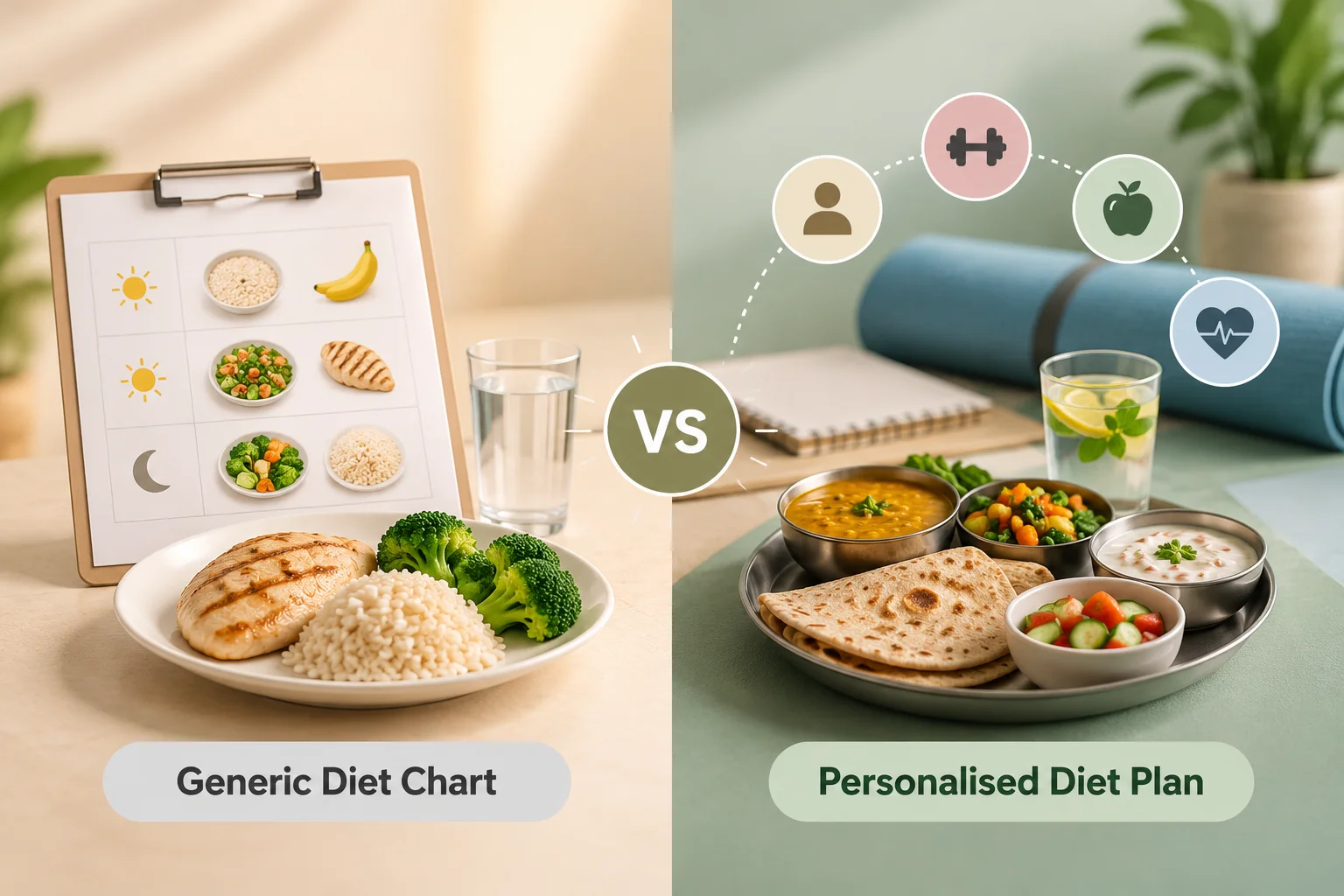
The main difference is the level of personalisation. A generic chart provides a starting point, while a personalised plan aims to make the advice more suitable for the person following it.
Which Is Better for Weight Loss?
Both a generic diet chart and a personalised diet plan can help you organise your meals. Neither guarantees weight loss on its own.
Weight management depends on several factors, including food intake, physical activity, sleep, daily habits and consistency. A plan that is too restrictive or difficult to follow may be hard to maintain over time.
A personalised diet plan for weight loss may be useful if you need help choosing suitable portions, fitting meals around your routine or making changes to your usual eating habits. It can also help account for vegetarian preferences, food allergies or other dietary restrictions.
A generic chart may be enough if you only need basic meal ideas and have no special dietary requirements. However, if you repeatedly struggle to follow a standard chart, a more individual approach may be worth considering.
Which Option Fits Your Lifestyle Better?
The best choice is one you can follow in your everyday life. Consider these examples before choosing a diet plan.
1. If You Have a Busy Work Schedule
A fixed chart may suggest meals at times when you are travelling, working or unable to cook. A personalised plan can take your usual schedule into account and suggest practical meal timings and alternatives.
2. If You Prefer Indian Home-Cooked Food
You do not necessarily need to replace your usual meals with unfamiliar foods. A suitable plan can use familiar options such as dal, roti, rice, vegetables, curd and seasonal fruit, with portions adjusted to your needs.
The aim is to build balanced eating habits, not to remove traditional foods without a good reason.
3. If You Follow a Vegetarian Diet
Your plan should consider the foods you eat and help you include suitable sources of protein and other nutrients. A standard chart may offer limited choices, while a personalised approach can provide alternatives that fit your preferences.
4. If You Exercise Regularly
Your food intake should support your activity level and recovery needs. If you are building a home workout routine, you can also explore suitable cardio equipment for home workouts. For example, a treadmill for home gym use can be one option for regular walking or running, depending on your fitness level.
Exercise equipment and meal planning serve different purposes, but both can form part of a routine that supports your fitness goals.
5. If You Have a Health Condition
If you have diabetes, kidney disease, high blood pressure or another condition that affects your nutritional needs, a general chart may not be suitable without professional review. Your dietary needs may also depend on medication, test results and advice from your healthcare professional.
In these cases, seek guidance from an appropriately qualified healthcare or nutrition professional rather than relying on a chart downloaded from the internet.
Does a Personalised Diet Plan Always Give Better Results?
No. A personalised diet plan is not automatically better simply because it has been customised.
Research published in Advances in Nutrition found that personalised nutrition advice improved some dietary intake measures compared with general advice across the studies reviewed. However, other reviews of randomised trials have found mixed results, which shows that outcomes depend on how the intervention is designed and delivered.
The quality of the advice, whether it is practical, and whether you can follow it all matter. A personalised plan that is too restrictive or ignores your preferences may not work well for you. A balanced generic chart may be useful if your needs are straightforward.
The goal should be a safe, balanced eating pattern that suits your needs and can be maintained over time. The World Health Organization also highlights adequacy, balance, moderation and variety as core principles of a healthy diet.
How to Choose the Right Diet Plan
Before choosing a plan, ask yourself these questions:
-
What is my main goal? You may want to improve your eating habits, manage your weight or support a fitness routine.
-
Does it suit my food preferences? Check whether the plan includes foods you eat and suitable alternatives.
-
Can I follow it every day? Consider your work hours, cooking time, family meals and budget.
-
Are the portions appropriate for me? A fixed chart may not reflect your individual needs.
-
Does it account for relevant health concerns? If you have a medical condition or take medication, seek appropriate professional advice.
-
Is support available if my needs change? Find out whether the service includes reviews or changes to the plan.
A useful diet plan should offer clear guidance without making healthy eating unnecessarily complicated.
How Can Ahaniya Help You Choose a Personalised Diet Plan?
If a standard diet chart does not fit your food preferences, routine or goals, a personalised approach may be worth exploring. Ahaniya offers a personalised diet plan enquiry option for people who want a plan based on their individual requirements.
Before enquiring, be ready to share relevant details such as your goals, food preferences, daily routine and any health information requested during the assessment. Ask what the plan includes, how it is prepared, whether follow-up is available and what the price covers.
The right service should explain its process clearly and avoid promising instant or guaranteed results.
Final Thoughts
The choice between a personalised diet plan and a generic diet chart depends on your needs. A generic chart can be a useful starting point for general meal planning. A personalised plan may be more suitable when you need guidance that accounts for your goals, food preferences, daily routine or specific dietary requirements.
Focus on balanced meals, practical changes and habits you can maintain. If you have a medical condition or need advice for a specific health concern, seek guidance from an appropriately qualified professional before making major dietary changes.
Frequently Asked Questions
1. What is the difference between a personalised diet plan and a generic diet chart?
A generic diet chart provides standard meal suggestions for a broad group of people. A personalised diet plan considers individual goals, food preferences, routine and relevant health information to make the guidance more suitable.
2. Is a personalised diet plan better for weight loss?
It may be helpful if you need advice that fits your routine, preferences and dietary needs. However, weight loss is not guaranteed. Results depend on several factors, including your overall eating habits, activity level and consistency.
3. Can I follow a generic diet chart for weight loss?
A generic chart can offer basic meal ideas, but it may not suit your energy needs, food preferences or health requirements. If you have a medical condition, take medication or need specific dietary guidance, consult an appropriately qualified professional.
4. What information is needed for a personalised diet plan?
Depending on the service, the assessment may ask about your age, height, weight, goals, activity level, food preferences, daily routine, dietary restrictions and relevant medical history. Not every service uses the same assessment process.
5. Is a personalised diet plan expensive?
The cost depends on the provider, the level of assessment and whether the service includes consultations, follow-up or plan updates. Ask for the price and inclusions before purchasing.
6. Can a personalised diet plan include Indian home-cooked food?
Yes. A suitable plan can include familiar foods such as roti, rice, dal, sabzi, curd and seasonal fruit, depending on your requirements and preferences. You do not automatically need special foods or supplements to follow a balanced diet.